- The Chicago 312
- Posts
- Chicago 312: Raja Krishnamoorthi Wants to Abolish the ICE He's Taking Checks From
Chicago 312: Raja Krishnamoorthi Wants to Abolish the ICE He's Taking Checks From
This week: Mayor Johnson declared a budget victory over no one in particular and Raja Krishnamoorthi's donor list is not the greatest!

H Kapp-Klote
March 12, 2026
This week: O'Neill Burke will strenuously oppose anyone else doing her job. Mayor Johnson is pre-gaming his budget vindication tour. Raja Krishnamoorthi wants to abolish the ICE whose contractors gave him $275K. And we are five days — one office job work week — from the primary. Are you sleeping enough?????
Either way, here’s what happened this week in Chicago politics:
Coalition Demands Special Prosecutor for ICE Crimes; O'Neill Burke Says That'll Make It Harder to Do the Thing She Hasn't Done
WTTW: A coalition of over 200 elected officials, attorneys, community organizations, journalists, and religious leaders — organized by Loevy and Loevy — is calling for a special prosecutor to investigate federal agents who "terrorized" Cook County during Operation Midway Blitz. The charges they want investigated: assault, illegal detention of an elected official, tear-gassing neighborhoods, and the shooting deaths and injuries of civilians, including Silverio Villegas González in Franklin Park and Marimar Martinez in Brighton Park.
O'Neill Burke is fighting the petition, calling it "frivolous" and "contrary to centuries of legal precedent." Her argument: a special prosecutor would make it harder for her office to prosecute ICE agents. Which would be more convincing if her office had charged a single agent with anything. It hasn't.
Why It Matters: This is becoming a legitimacy test for the State's Attorney. The coalition says the crimes were witnessed by hundreds of people, captured on camera, and documented in sworn declarations already filed in federal court. O'Neill Burke says the Supremacy Clause and federal stonewalling make prosecution difficult — which is probably true! But "it's hard" and "I'll strenuously oppose anyone else trying" can't coexist. Though it’s worth asking if O’Neill Burke is the only elected official that can take significant action against ICE in this way?
2. Johnson Tells Budget Town Hall: "I Told You So, and Also We're Screwed"
Block Club Chicago: Mayor Johnson held a budget town hall on March 5 at Broadway United Methodist Church in Lakeview, where he warned that the city could face a financial crisis. The mayor's message: the Council passed a budget he called "morally bankrupt" back in December. Now, when the cuts come, Johnson wants you to remember who passed this budget (not him).
Johnson pointed to the limited revenue tools available to him — basically property taxes and not much else — and argued the Council's alternative budget, which swapped his corporate head tax for garbage fees, a liquor tax, and video gambling machines, doesn't generate the recurring revenue the city needs. He also flagged the $1.25 billion in bonds backed by expiring TIF districts that the Council approved for affordable housing and economic development, but said those programs can't be sustained without stable revenue.
Why It Matters: The budget war has barely begun. The Council bloc passed a spending plan in December that Johnson said would create a $163 million deficit — and now the mayor is doing the political work of setting up his "I told you so" for when mid-year cuts start landing. This town hall was, in part, a campaign event: framing the structural deficit as a consequence of the Council's refusal to tax corporations, while positioning Green Social Housing and TIF-backed bonds as the administration's legacy wins.
3. Raja Krishnamoorthi Has Taken $793K from ICE Contractors, AIPAC, and Weapons Manufacturers
Sacred Democracy / ACRE Report: A new report from SACRED Acts and the Action Center on Race & the Economy documents that Rep. Raja Krishnamoorthi (IL-08), the frontrunner in the Illinois U.S. Senate race, has accepted at least $793,262 from three categories of Trump-aligned donors: $275,220 from seven corporations named in a January 2026 Financial Times report as major ICE and CBP contractors (including Palantir, Accenture, Dell, Deloitte, General Dynamics, Motorola Solutions, and OSI Systems); $323,542 from AIPAC's PAC and direct contributions from AIPAC board members and major donors; and $194,500 from weapons manufacturers including Lockheed Martin, Boeing, Honeywell, RTX (Raytheon), and Northrop Grumman.
Krishnamoorthi has been running on a platform of "abolishing Trump's ICE" and calling the war on Iran a "reckless decision" — while accepting hundreds of thousands from the companies that profit most directly from both operations.
Why It Matters: With 46% of voters still undecided, according to recent polling cited in the report, the argument is straightforward: you cannot credibly promise to stand up to the Trump administration's immigration enforcement and war machine while taking money from the companies that are the immigration enforcement and war machine.
1 Big Question: "The Rage Clip Won't Save You": Megan Thuy on What Progressive Creator Infrastructure Actually Looks Like in Illinois

Megan Thuy runs Creator Congress and is part of the Illinois Coalition for Human Rights' push to repeal Illinois's anti-BDS law. I wanted this interview to run before the March 17 primary for a simple reason: the creator-to-organizer pipeline is one of the few things that could actually shift power in Illinois races where turnout is everything and institutional money is stacked against progressive candidates. And right now, that pipeline barely exists here. — H
A lot of progressive digital strategy is built around national outrage — reacting to whatever Trump or Congress did that day. Creator Congress seems to be trying to build something different. What does durable creator-organizer infrastructure actually look like at the state and local level?
"Outrage" messaging had a brief moment at the end of the Biden administration and the beginning of Trump's second presidency — coming not just from creators, but from Democratic electeds who were applauded for strong, defiant statements. But people are tired of "strongly worded letters." We need to give people a vision beyond "not-Trump." Creator Congress houses creators who do and not just talk. In Chicago, two examples are Rachel Cohen and Lauren Lehman Carter. Their content isn't about their own rage — it's rooted in collective responsibility and building a safer, stronger community. Community and trust is what makes this fight sustainable.
Illinois has a primary on March 17 and a bunch of consequential local races, but most progressive creators aren't touching state or local policy. What are the biggest barriers?
The biggest barrier is capacity and lack of funding. Left-of-center creators genuinely don't make money from this work. Election and policy content requires research, scripting, assets, editing, and enough confidence to handle pushback. A lot of creators want to do more but don't have capacity. Mamdani's NYC mayoral campaign did a great job leveraging creators by sending toolkits, press clips, and hosting briefings. When you're working for free, that kind of infrastructure makes all the difference. I'd love to see more campaigns do that.
The other barrier is Illinois's big "blue" tent, which restricts the collaboration that makes creator campaigns work. The tent runs from Madigan-era Democrats who are functionally Republicans all the way to anti-Zionist progressives, and that gap is hard to organize across. When local creators aren't united behind candidates and able to coordinate messaging, going down-ballot feels almost impossible. Illinois is harder to crack, and I'll be honest — I don't have a clean answer yet.
What's a piece of Illinois legislation right now that you think more creators should know about?
The Human Rights Advocacy Protection Act is critical to protect non-violent protest and restore constitutional rights. In 2014, Netanyahu spent $25.5 million to push this legislation nationally. The man who wrote the Illinois bill is Richard Goldberg — an Iran war hawk who has been advising the Trump White House on military action against Iran since the first term. An Iran war hawk wrote a pension policy, funded by Netanyahu, that violates the First Amendment. The Supreme Court has repeatedly stated boycott is protected protest, companies have First Amendment rights, and viewpoint discrimination is unconstitutional. Illinois's 2015 anti-boycott law violates all three.
When you're working on the anti-BDS repeal in Springfield with ICHR, does the creator strategy look different than national work?
Completely. In Illinois, we're working against Michael Sacks pressuring Democrats to kill the bill, and ADL and AIPAC writing legislators to call the repeal antisemitic. So the strategy shifts from awareness to education, targeted messaging, and finding the right messengers. Jewish voices are essential to undermine those pressure tactics in ways outside critics simply can't. Organizing locally in Illinois isn't just about a big tent — it's about entrenched power structures that require you to build trust before you can build any momentum at all.
You've talked a lot in different interviews about relationship-building over rage clicks. For a creator who has an audience and wants to be useful to organizing work in their city or state but doesn't know where to start — what's the first thing you'd tell them to do?
Most of my content is informed by relationships with trusted people with decades in grassroots organizing, researchers, legislators, staffers. I build relationships with people whose opinions could be trusted and they inform my content. That trust extends to my audience. I’d recommend just reaching out to local organizations whose work you want to amplify and to just get started!
2 Red Flags:
🚨 Chicago's Inspector General Says the City's Own Lawyers Withheld Hiring Records — Then There Was a FOIA Request
WTTW: Inspector General Deborah Witzburg dropped an advisory opinion revealing that the city's Department of Law refused to provide records about "high-profile" city hires. The IG's opinion doesn't name the "high-profile" hires in question, but the implication — that someone in City Hall didn't want the inspector general looking at who was getting hired — is hard to miss. Witzburg is on her way out, so this kind of reads like a parting shot: here’s what the next IG should watch…
🚨 The Swoletariat
NPR's It's Been a Minute: NPR traced the history of left-wing fitness culture and explores why it's picking up steam on social media right now.
It's not breaking news (though I know all you nerds love leftist fitness content, me too) but it connects to something the Know Your Enemy podcast explored this month with Chris Hayes: the attention economy as a political battleground. Hayes' argument in The Sirens' Call is that attention has replaced information as the defining commodity of modern life, far beyond ‘political content’. Every organizer, every campaign, every institution in this city has to compete in an attention economy rigged against them. The question isn't just "how do we get our message out?" It's "how do we build the physical and digital spaces where people can actually pay attention to each other?"
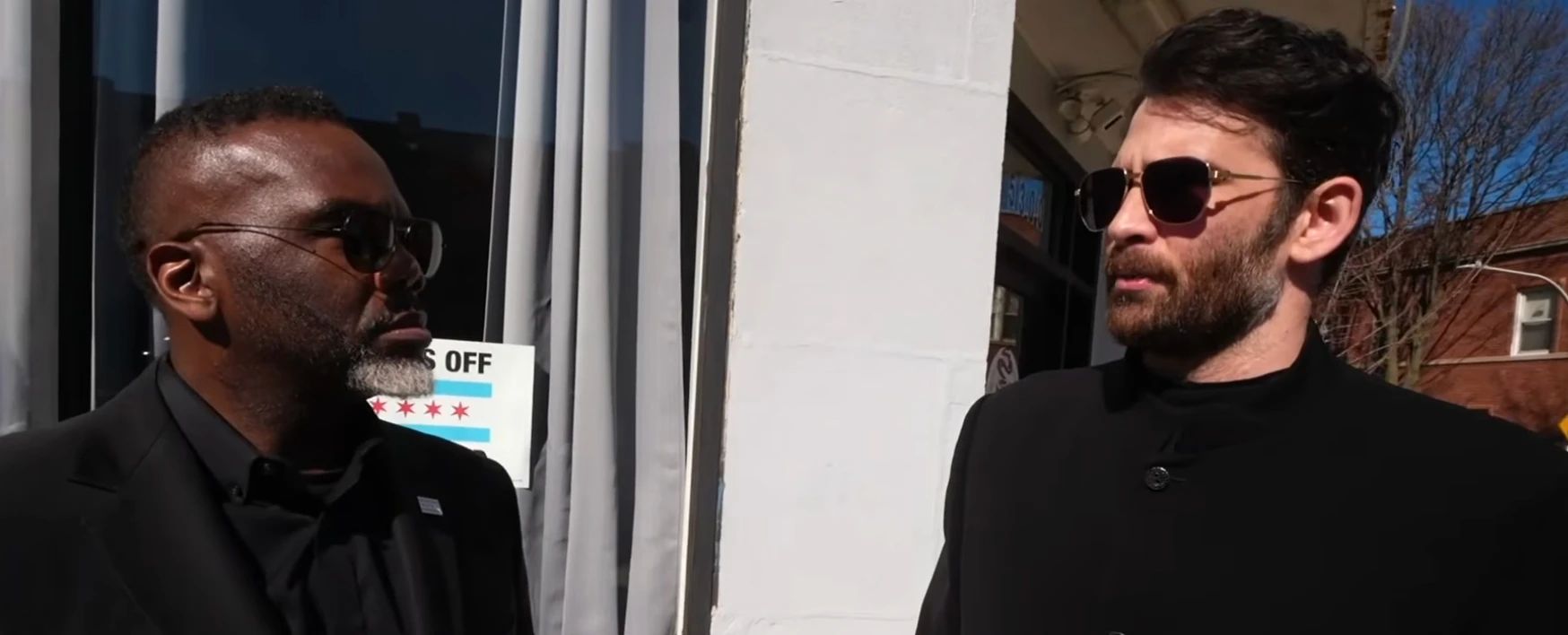
Related both to swoletariat and the attention economy: Mayor Johnson continues his media tour, bringing Hasan Piker and the JAAM Podcast crew to the West Side this weekend to walk the Soul City Corridor in Austin.
That's it for this week.
Coming soon: what is Chicago's water commission and how does it work, some ongoing event potentially some big news. Stay tuned.
— H
Reply